
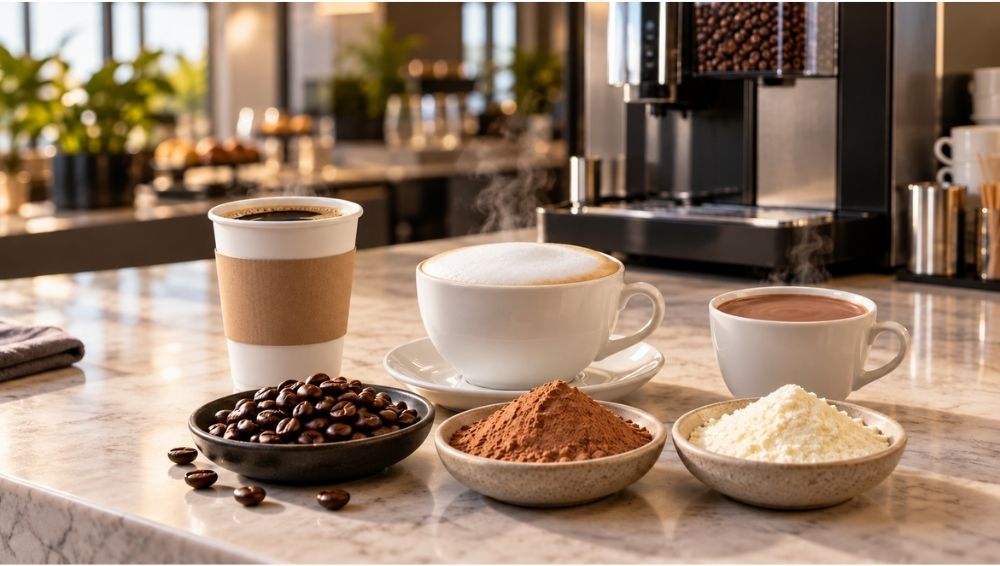
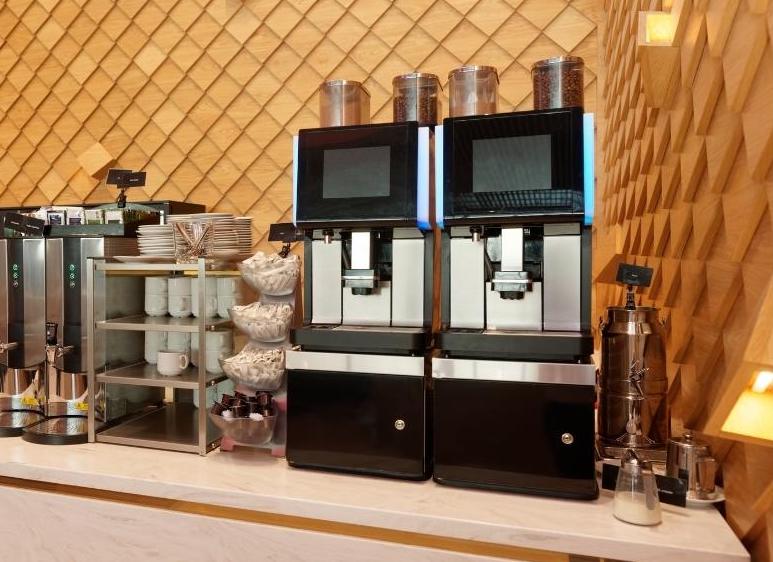
A busy convenience store, a hotel breakfast area and an office breakroom may all offer bean-to-cup programs. But the right beverage selection can look different in each setting.
For operators, the challenge is choosing products that fit the people they serve. For distributors and office coffee service providers, it means supplying a range that works across different accounts. For private-label brands, it means creating an offering customers recognize and come back to.
The starting point is the same: whole-bean coffee, complementary beverage mixes and a sourcing plan that brings them together.
At Corim Industries, we help buyers develop that combination through custom coffee roasting, specialty beverage formulation and private-label packaging.
Start With Who You Serve
Before choosing flavors, consider how and where the beverages will be served. Is coffee a standalone purchase, part of a hospitality experience or an everyday workplace amenity? Are you selecting products for one location or supplying dozens of accounts?
Those differences should guide your lineup.
- Convenience stores and other retail operators: Consider everyday coffee preferences alongside specialty choices that give customers additional reasons to purchase.
- Office coffee service providers: Balance familiar favorites with variety that serves different tastes throughout the workday.
- Hotels and hospitality operators: Select beverages suited to the guest experience, service hours and available equipment.
- Restaurants and foodservice operators: Consider how coffee and specialty drinks complement meals, takeout orders or self-service areas.
- Distributors: Develop a core assortment that can serve multiple account types, with options to accommodate individual customer needs.
- Private-label brands: Define the flavors, product specifications and packaging that make the offering your own.
A focused selection with a clear purpose is a stronger starting point than adding products simply because they are available.
Whole-Bean Coffee: The Foundation of the Offering
Specialty drinks add variety, but the everyday coffee deserves just as much attention.
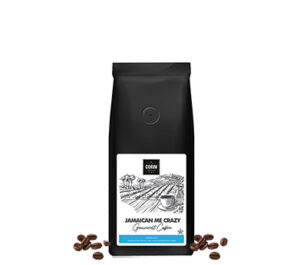
When sourcing wholesale whole-bean coffee for a bean-to-cup program, consider the intended flavor profile, preparation settings and audience. A coffee selected for a bold standalone cup may serve a different purpose from one intended for milk-based beverages.
Evaluate samples in the equipment and recipes you plan to use. The goal is to understand how the coffee performs in the finished drink, not just how it tastes under ideal sampling conditions.
At Corim Industries, we offer fresh-roasted whole-bean coffee with custom roasting and blending. Buyers can develop a profile suited to their business, whether supplying an established account, introducing a branded offering or expanding an existing range.
Specialty Beverage Mixes: Give Every Addition a Job
Cappuccino, hot chocolate, chai and other specialty mixes can broaden your offering beyond a traditional cup of coffee.
The most useful additions fill a specific need. Hot chocolate may provide an option for someone who does not want coffee. A flavored cappuccino can add an indulgent choice. A seasonal selection can bring variety to an established lineup.
For distributors, these products also create opportunities to supply more of an account’s beverage needs alongside its whole-bean coffee.
Start with a few questions:
- Which beverages are customers or accounts asking for?
- What does the current selection lack?
- Which products suit the available equipment?
- Will demand support a permanent addition or a limited-time offering?
Equipment matters here. Powder capacity, dispensing systems and recipe settings vary. Corim can help you confirm product suitability for the intended machine before committing to a new mix.
Corim develops specialty beverage mixes with flavor, solubility and consistency in mind, with custom formulation options for buyers who need a more specific profile.
Soluble Milk Powders and Creamers: Include the Supporting Ingredients
Coffee and specialty flavors often get the attention, but supporting ingredients belong in the sourcing conversation too.
For systems designed to use them, soluble milk powders can be an important part of the beverage lineup. Compared with fresh milk, properly stored milk powders offer a longer shelf life, providing greater flexibility for inventory planning and helping reduce spoilage.
Corim offers a range of options to support different recipes and customer preferences:
- Soluble milk
- Creamers
- Cappuccino creamer
- Cappuccino topping
- 100% non-fat dry milk
- Vegan and non-dairy creamer
Evaluate these products alongside your coffee and other mixes, with attention to taste, texture, dispensing performance and the finished recipe.
Not every bean-to-cup machine uses powdered milk or creamers. Some use fresh milk, and equipment configurations differ. The right choice depends on the system and the beverages being offered.
Corim’s range gives buyers more ways to round out their beverage offerings while coordinating coffee, mixes and supporting ingredients through one supplier.
For Distributors, Think Across Accounts
A distributor’s product range has to do more than suit one location. It needs to provide useful choices for customers with different equipment, audiences and volume requirements.
One practical approach is to establish a core assortment, then identify where account-specific options are needed. That might mean a dependable whole-bean coffee offering, complementary specialty mixes and soluble milk powders for compatible systems.
From there, consider:
- Product specifications: Which requirements can be shared across accounts, and which need to differ?
- Packaging: What formats and quantities suit each customer’s storage and replenishment needs?
- Branding: Would private-label products support your business or a customer’s branded offering?
- Expansion: Which related products could help you serve more of an existing account’s needs?
This shifts the conversation from supplying an individual item to supporting a more complete beverage offering.
One Source, With Options That Fit Your Business
Choosing a bean-to-cup coffee supplier that also manufactures specialty beverage mixes can help bring more of your sourcing needs together. It gives buyers a way to coordinate product development, specifications and packaging through one manufacturing partner.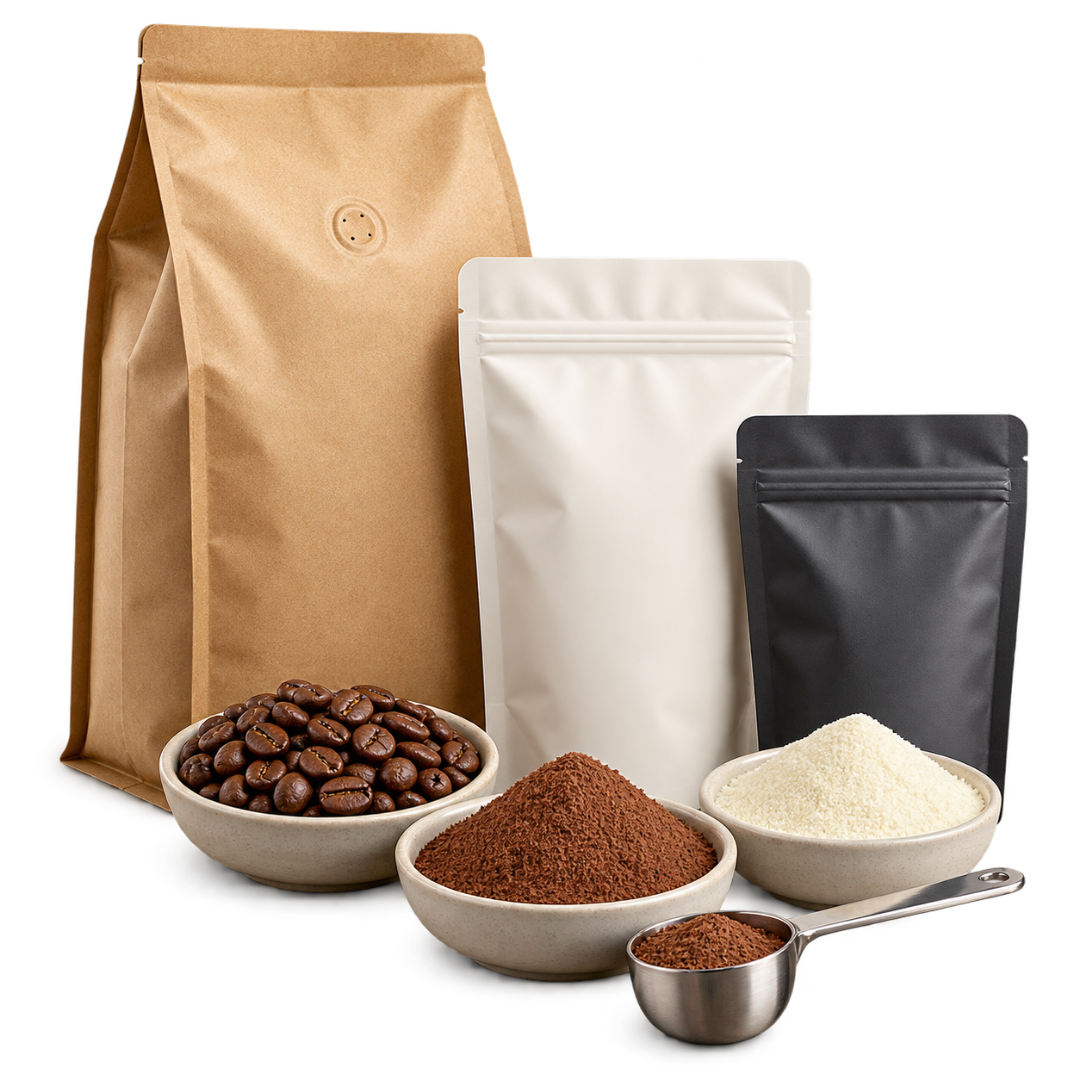
At Corim Industries, our capabilities span whole-bean coffee, specialty beverage mixes, soluble milk powders, custom formulation and private-label packaging. We work with buyers to bring those elements together around their requirements.
For an operator, that may mean selecting coffee and complementary mixes for a location. For a distributor, it may mean developing an assortment for several account types. For a private-label buyer, it may mean creating a coordinated range under one brand.
The convenience of one source should come with room to tailor the products to your business.
Let’s Talk About Your Next Order
Whether you’re sourcing for your own locations, supplying customers or developing a private-label range, start with what your business needs:
- Equipment and preparation requirements
- Coffee profiles and beverage selections
- Expected order volumes
- Packaging and branding preferences
Bring those details to Corim Industries. Our team can help you identify coffee, mixes and customization options for your next order.

 Trend Alignment
 Bringing It All Together